Sun Tzu in 30 Quotes, and Why No Two Translations Agree
Sun Tzu
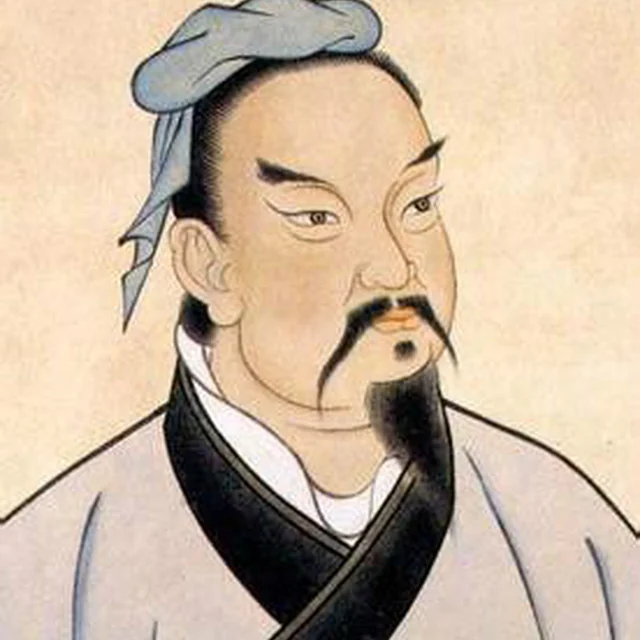
Sun Tzu is the name attached to The Art of War, a Chinese military treatise of about the fifth century BC. Whether he existed as a single general named Sun Wu, served the state of Wu, or is a convenient label for a school of strategists is still argued by historians. Bamboo slips recovered from a tomb at Yinqueshan in 1972 confirmed the text is genuinely ancient rather than a later forgery. The work reached Europe through a French Jesuit translation in 1772 and entered English properly with Lionel Giles in 1910.
Photo: Unknown author Unknown author — Public domain, Wikimedia Commons
Nobody quotes Sun Tzu. They quote a translator. The Art of War is a terse classical Chinese text whose lines can be rendered a dozen defensible ways, and the versions that circulate on business slides are usually smoothed-out paraphrases of Lionel Giles rather than Giles himself. The quotes below are given in Giles's 1910 wording, which is out of copyright and checkable line by line, with the popular rewordings marked where they differ.
The famous ones, as actually translated
All warfare is based on deception. — *The Art of War*, I
If you know the enemy and know yourself, you need not fear the result of a hundred battles. — III
To fight and conquer in all your battles is not supreme excellence; supreme excellence consists in breaking the enemy's resistance without fighting. — III
The supreme art of war is to subdue the enemy without fighting. — *popular rewording of the line above; no translator prints it in this form*
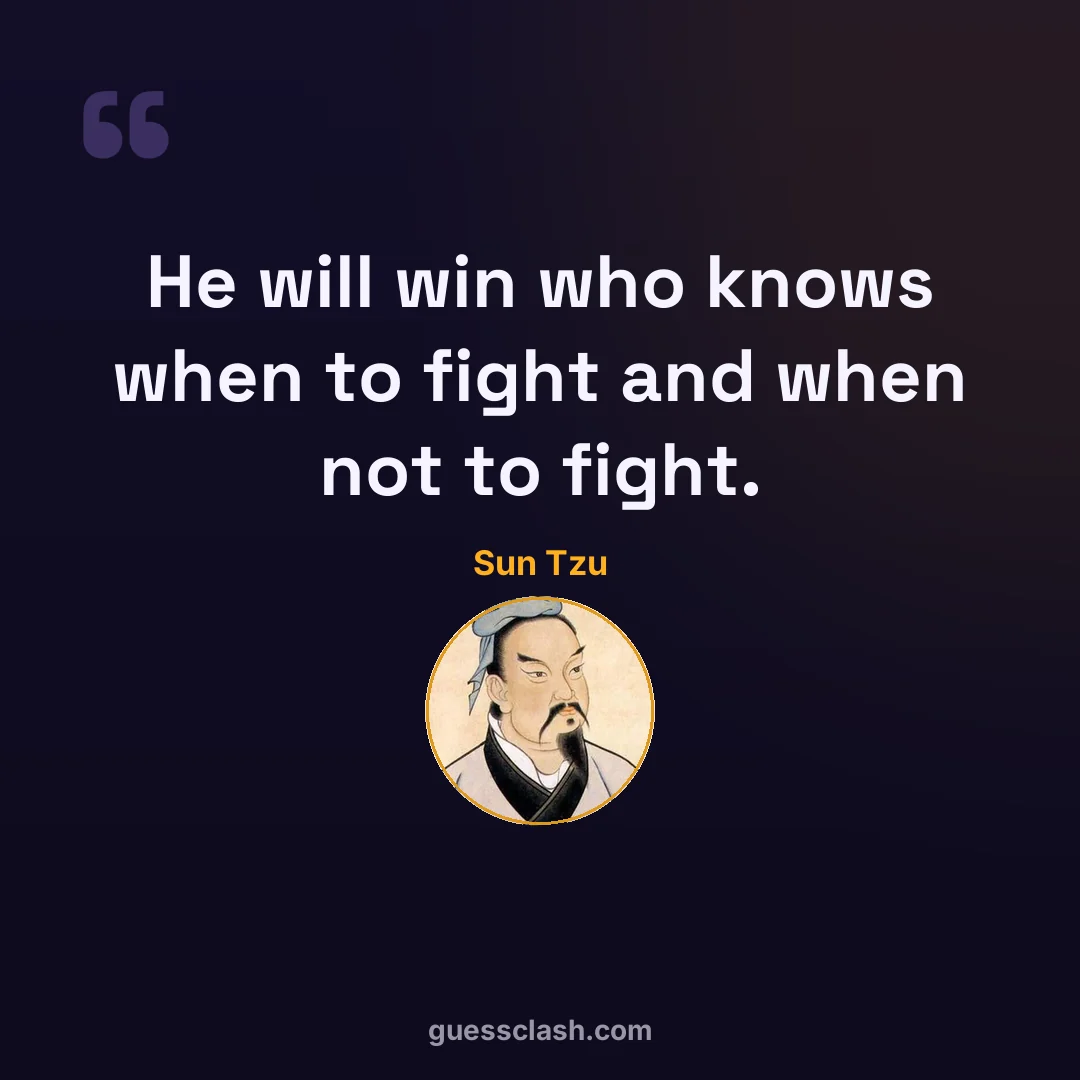
He will win who knows when to fight and when not to fight. — III
On preparation, which the book cares about more than combat
The art of war is of vital importance to the State. — I, opening line
The good fighters of old first put themselves beyond the possibility of defeat, and then waited for an opportunity of defeating the enemy. — IV
Thus it is that in war the victorious strategist only seeks battle after the victory has been won. — IV
There is no instance of a country having benefited from prolonged warfare. — II
In war, then, let your great object be victory, not lengthy campaigns. — II
On deception and shape
When able to attack, we must seem unable; when using our forces, we must seem inactive. — I
Hold out baits to entice the enemy. Feign disorder, and crush him. — I
O divine art of subtlety and secrecy! Through you we learn to be invisible, through you inaudible; and hence we can hold the enemy's fate in our hands. — VI
Military tactics are like unto water; for water in its natural course runs away from high places and hastens downwards. — VI
Therefore, just as water retains no constant shape, so in warfare there are no constant conditions. — VI
On speed and timing
Rapidity is the essence of war. — XI
Let your rapidity be that of the wind, your compactness that of the forest. In raiding and plundering be like fire, in immovability like a mountain. — VII
Let your plans be dark and impenetrable as night, and when you move, fall like a thunderbolt. — VII
The quality of decision is like the well-timed swoop of a falcon which enables it to strike and destroy its victim. — V
On the opponent's mind
The clever combatant imposes his will on the enemy, but does not allow the enemy's will to be imposed on him. — VI
You may advance and be absolutely irresistible, if you make for the enemy's weak points. — VI
He who is skilled in attack flashes forth from the topmost heights of heaven, making it impossible for the enemy to guard against him. — IV
Do not repeat the tactics which have gained you one victory, but let your methods be regulated by the infinite variety of circumstances. — VI
If the enemy is taking his ease, give him no rest. — I
On command and troops
Regard your soldiers as your children, and they will follow you into the deepest valleys. — X
The general who advances without coveting fame and retreats without fearing disgrace is the jewel of the kingdom. — X
If soldiers are punished before they have grown attached to you, they will not prove submissive. — IX
Ponder and deliberate before you make a move. — VII
Know the enemy, know yourself, and your victory will never be endangered. — X
Thus the highest form of generalship is to balk the enemy's plans. — III
Spies are a most important element in war, because on them depends an army's ability to move. — XIII
The book spends far more time on supply, terrain, spies and the cost of campaigning than on fighting, which is why it survives outside military reading. Chapter II is largely an argument that war ruins the state that wages it too long, and chapter XIII, on the use of agents, ends the whole treatise by saying that good information is cheaper than an army.
Four lines quoted as Sun Tzu that are in no edition
- "Keep your friends close and your enemies closer." From *The Godfather Part II*, written by Mario Puzo and Francis Ford Coppola in 1974. It appears in no Chinese text.
- "If you wait by the river long enough, the bodies of your enemies will float by." No source in The Art of War or in any classical Chinese work. It is sometimes credited to Confucius instead, which is the usual sign of an orphan quote.
- "Opportunities multiply as they are seized." Circulated for decades on management slides. Not in Giles, not in the later translations, not in the bamboo text.
- "Appear weak when you are strong, and strong when you are weak." This one is a fair summary of a real passage in chapter I, but it is a modern compression rather than a translation. No published edition contains the sentence.
The lesson is worth carrying to any translated author. When a quote from a classical text sounds crisp enough for a poster, it has usually been edited by someone other than the writer. The fix is not to stop quoting, only to name the translation, which is what the attributions above are for.
What is the most famous Sun Tzu quote?
"If you know the enemy and know yourself, you need not fear the result of a hundred battles", from chapter three. It is also the line most often shortened, usually to something like "know yourself and win every battle".
Which translation of The Art of War should I quote?
Lionel Giles from 1910 is out of copyright, widely available and easy to cite by chapter. Modern translations by Roger Ames and Victor Mair read better but are in copyright.
Did Sun Tzu actually exist?
It is unresolved. Traditional accounts describe a general named Sun Wu serving the state of Wu, but the historical record is thin. What is settled is the text's antiquity, confirmed by bamboo manuscripts excavated in 1972.
Sources
Keep reading
 Quotes & Sayings30 Nietzsche Quotes, and What "God Is Dead" Actually SaysThe most famous sentence in modern philosophy is usually read as a boast. In context it is spoken by a madman and it is a warning. Thirty quotes with the book and section number.
 Quotes & SayingsVan Gogh Wrote 800 Letters. Here Are 30 Lines From Them.Van Gogh sold almost nothing and explained almost everything, in letters mostly to his brother Theo. Thirty lines from the correspondence, plus four famous ones that appear nowhere in it.
 Quotes & SayingsDarwin's Most Quoted Sentence Is Not His: 30 That AreThe line about the species most adaptable to change was written by a business professor in 1963. Thirty quotes that really are Darwin's, from the books, the notebooks and the letters.
 Quotes & Sayings30 Emily Dickinson Lines, With the Dashes Put BackDickinson published about ten poems in her lifetime and her editors removed her dashes, added titles and smoothed her rhymes. Thirty lines in the punctuation she actually used.