30 Confucius Quotes From the Analects, and What He Was Really Arguing
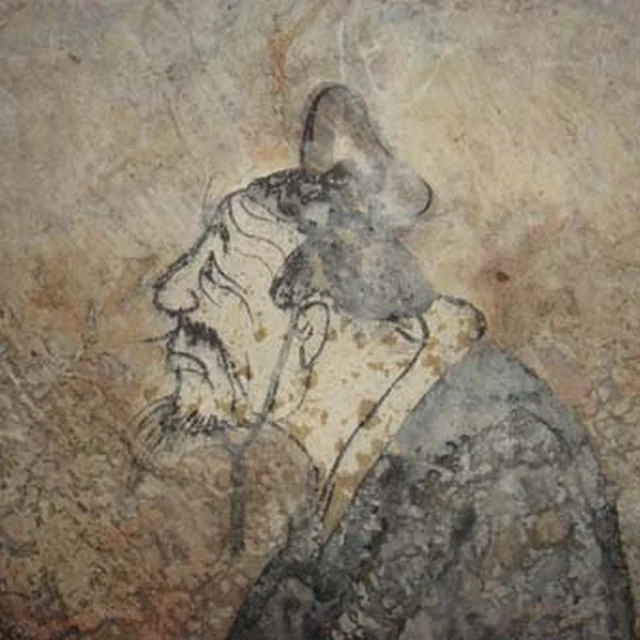
Confucius
Kong Qiu, known in the West as Confucius, was born around 551 BC in the state of Lu, in what is now Shandong province. He worked as a minor official, spent years travelling between courts trying to persuade rulers to govern by example rather than punishment, and was largely ignored in his lifetime. He taught instead, reportedly to thousands of students, and died at about seventy-two without seeing his ideas adopted. The Analects, a collection of his sayings and conversations, was compiled by his followers after his death and became the backbone of Chinese education for two thousand years.
Photo: Anonymous Chinese painter of the Western Han period — Public domain, Wikimedia Commons
The Analects is not a book Confucius wrote. It is a record kept by his students of what he said, often mid-conversation, sometimes mid-argument, and it reads that way: fragments, replies, the occasional flash of irritation.
That is worth knowing before you read the lines below. He is not issuing proverbs. He is answering a specific person who asked a specific question, usually about how to behave when nobody is checking.
On learning
Learning without thought is labour lost; thought without learning is perilous. — Analects 2.15
When you know a thing, to hold that you know it; and when you do not know a thing, to allow that you do not know it — this is knowledge. — Analects 2.17
I am not one who was born in the possession of knowledge; I am one who is fond of antiquity, and earnest in seeking it there. — Analects 7.19
When I walk along with two others, they may serve me as my teachers. I will select their good qualities and follow them, their bad qualities and avoid them. — Analects 7.21
The man who moves a mountain begins by carrying away small stones.
Learn as if you were not reaching your goal and as though you were scared of missing it. — Analects 8.17
On how to treat people
What you do not want done to yourself, do not do to others. — Analects 15.23
The superior man is modest in his speech but exceeds in his actions. — Analects 14.27
Hold faithfulness and sincerity as first principles. Have no friends not equal to yourself. When you have faults, do not fear to abandon them. — Analects 1.8
The superior man is catholic and not partisan. The mean man is partisan and not catholic. — Analects 2.14
Fine words and an insinuating appearance are seldom associated with true virtue. — Analects 1.3
Do not be concerned that no one knows you; seek to be worth knowing. — Analects 1.16
On government and example
He who exercises government by means of his virtue may be compared to the north polar star, which keeps its place while all the stars turn towards it. — Analects 2.1
If the people be led by laws, and uniformity sought to be given them by punishments, they will try to avoid the punishment, but have no sense of shame. — Analects 2.3
If a ruler himself is upright, all will go well without orders. But if he himself is not upright, even though he gives orders, they will not be obeyed. — Analects 13.6
The essence of government is to rectify names: to call each thing what it truly is. — Analects 13.3

On character
The superior man thinks of virtue; the small man thinks of comfort. — Analects 4.11
When we see men of worth, we should think of equalling them; when we see men of a contrary character, we should turn inwards and examine ourselves. — Analects 4.17
The superior man is distressed by his want of ability, not by men's not knowing him. — Analects 15.18
The firm, the enduring, the simple and the modest are near to virtue. — Analects 13.27
To see what is right and not to do it is want of courage. — Analects 2.24
The superior man may indeed have to endure want, but the mean man, when he is in want, gives way to unbridled licence. — Analects 15.1
On mistakes
When you have faults, do not fear to abandon them. — Analects 1.8
To have faults and not to reform them — this, indeed, should be pronounced having faults. — Analects 15.29
The faults of a superior man are like an eclipse of the sun and moon. He has his faults, and all men see them; he changes again, and all men look up to him. — Analects 19.21
On a life, in one paragraph
At fifteen I had my mind bent on learning. At thirty I stood firm. At forty I had no doubts. At fifty I knew the decrees of Heaven. At sixty my ear was an obedient organ. At seventy I could follow what my heart desired, without transgressing what was right. — Analects 2.4
Is it not pleasant to learn with a constant perseverance and application? Is it not delightful to have friends coming from distant quarters? — Analects 1.1
The wise are free from perplexities; the virtuous from anxiety; and the bold from fear. — Analects 9.28
Hold sincerity and truthfulness as first principles. — Analects 9.24
A man who has committed a mistake and does not correct it is committing another mistake.
The fortune-cookie problem
A great many lines circulate as "Confucius says" with no connection to him at all: *"Choose a job you love and you will never work a day in your life"*, *"The journey of a thousand miles begins with one step"* (that one is Laozi, from the *Tao Te Ching*), and most of the jokes that begin with his name.
The test is simple. If a Confucius quote has no book and chapter attached, treat it as unproven. The Analects is short, numbered and freely available in James Legge's public-domain translation, which is where the passages above come from.
Did Confucius write the Analects?
No. His students and their students compiled it after his death, probably over several generations, which is why some passages repeat and others contradict each other slightly.
What does superior man mean in these translations?
It renders junzi, literally a ruler's son, which Confucius redefined to mean someone noble in conduct rather than birth. Modern translations often use gentleman, exemplary person or noble-minded person.
Is the golden rule in Confucius?
Yes, in negative form: do not do to others what you would not want done to yourself, at Analects 15.23. It predates the New Testament version by roughly five centuries.
Sources
Keep reading
 Quotes & Sayings30 Nietzsche Quotes, and What "God Is Dead" Actually SaysThe most famous sentence in modern philosophy is usually read as a boast. In context it is spoken by a madman and it is a warning. Thirty quotes with the book and section number.
 Quotes & SayingsVan Gogh Wrote 800 Letters. Here Are 30 Lines From Them.Van Gogh sold almost nothing and explained almost everything, in letters mostly to his brother Theo. Thirty lines from the correspondence, plus four famous ones that appear nowhere in it.
 Quotes & SayingsDarwin's Most Quoted Sentence Is Not His: 30 That AreThe line about the species most adaptable to change was written by a business professor in 1963. Thirty quotes that really are Darwin's, from the books, the notebooks and the letters.
 Quotes & Sayings30 Emily Dickinson Lines, With the Dashes Put BackDickinson published about ten poems in her lifetime and her editors removed her dashes, added titles and smoothed her rhymes. Thirty lines in the punctuation she actually used.